
Discourse around AI has reached a fever pitch. Debate on the AI industry is occurring in cafes and homes across the world and has entered the political discourse at the highest levels.
EP Carbon, and our line of work (supporting the development of nature-based carbon projects), have already been significantly impacted by the “Generative AI Revolution.” The use of AI to support nature-based projects has grown seemingly exponentially in the last decade, being heralded as a “powerful tool for democratizing and scaling efforts to halt and reverse nature loss globally.” In the nature-based projects world, AI is already contributing to:
- Processing of satellite and field data to monitor environmental impacts;
- Tracking of fishing vessel movements and wildlife mapping;
- Developing/improving of natural disaster (e.g., wildfires) warning systems.
Though generative AI can and should play a role in improving the efficiency and integrity of nature-based carbon projects, there is no indication that AI will replace human’s roles in this industry.
What is AI?
According to Microsoft Copilot: Artificial Intelligence (AI) is the ability of computer systems to perform tasks that normally require human intelligence, such as learning from data, reasoning, problem‑solving, perception, and decision‑making. It enables machines to simulate aspects of human thought and act autonomously to achieve defined goals
Although AI has come to the forefront of global discourse in recent years, the AI models (e.g., GPT, Gemini, LLAMA) most frequently used are the product of a process of development that dates back to the 1950s, when researchers began programming computers with “if/then” statements to mimic human logic. The most famous real-world example of this was the MYCIN (Medical Expert System), developed at Stanford in the 1970s. It was designed to diagnose bacterial infections and recommend antibiotics, emulating the work of human experts in the field.
Our current era of AI development is known as the Generative AI Revolution, which began in 2017 and is marked by AI models’ abilities to process all parts of a sequence (like a sentence) simultaneously. This is the foundational technology for modern models like ChatGPT and Gemini. In simple, human words, computers became capable of understanding the big picture of a whole sentence immediately, which is why modern AI models can understand and create complex, natural language so effectively.
How is AI being used in nature-based carbon projects?
As noted in the open of this article, AI has already seen considerable and varied use in nature-based carbon projects. However, there is one broad area in which its past and potential future use stands out: Monitoring. Nature-based carbon project monitoring often relies on a method within AI referred to as Machine Learning (ML). In ML for nature-based projects, algorithms are trained on data (ideally project-area-specific field data) to find patterns and make predictions. For example, ML models, when properly trained, can analyze satellite images to accurately map aboveground biomass and detect subtle changes in forest cover over time to pinpoint illegal logging or degradation in near real-time. In general, for nature-base projects, AI:
- Can be used to monitor a variety of forest and agricultural conditions.
- Has proven useful in detecting the ignition and spread of wildfires and other natural disasters that can result in loss events.
Is being refined for the real time monitoring of aboveground carbon stocks and the quantification of associated emissions reductions, removals, or reversals.
The Good
Real-time monitoring of inaccessible areas
Monitoring of carbon stock changes to quantify the impacts of project activities is often logistically difficult and expensive: for carbon projects that take place across large expanses of land where limited infrastructure is present, monitoring project activities can be nearly impossible. The use of remote sensing data to detect project impacts and monitor natural disturbances has grown in importance over the last several decades and is increasingly being bult into the framework of existing carbon crediting methodologies. The connection between AI and remote sensing data is varied and complex, but AI (specifically Machine Learning ) facilitates the automated transformation of mass amounts of raw remote sensing data into actionable information for detecting and monitoring vegetation changes. It automates a process that was previously slow, subjective, and costly and also allows for the near real-time detection of changes in forest conditions and disturbances from remotely sensed data.
Can (sometimes) improve efficiency and reduces costs
AI can be used to summarize large amounts of information rapidly. It can conduct literature reviews and summarize the findings and can also produce first drafts of text. This functionality allows professionals working on nature-based carbon projects to reach general conclusions more efficiently. However, the use of AI for more specific tasks can backfire, as discussed in the next section, and decrease project integrity and efficiency.
Not a serious threat to anyone’s job, yet
Carbon project developers and their collaborators are generally working under very tight budgetary constraints with the bare minimum amount of staff necessary to complete their work. Our experience at EP Carbon is that, when given detailed and extensive prompts, AI can help staff perform simple and early-stage tasks more efficiently, such as producing high-level summaries of literature or creating first drafts of internal documents. Having AI compete these tasks ultimately saves analysts and senior staff time and allows them to begin tasks at more advanced stages. EP Carbon would not hire dedicated staff to perform these tasks. Time saved by using AI is ultimately money saved for our clients and the projects they develop and has not taken jobs away from anyone.
The not-so-good
Gets stuff wrong (and hallucinates)
Whether being used for more complex tasks like automating analyses of changes in vegetation cover over time or for more simple tasks like conducting high-level literature reviews, AI makes mistakes. AI platforms, like ChatGPT, do not hide this fact. However, mistakes are one thing, lies are another. Take this situation as an example: A carbon analyst is researching what an accepted height threshold is to separate seedlings from saplings in a region they are not familiar with.
- The analyst asks an AI platform to provide citations of peer-reviewed literature that support a cutoff height between the two categories.
- It does – 30 cm.
- The analyst opens the articles cited and cannot locate the 30 cm height threshold referenced to separate seedlings from saplings. The analyst then asks the AI platform to point to exactly where in the referenced articles the 30 cm threshold appeared.
- The platform then responds: “Upon reviewing the available literature, I was unable to locate specific definitions of seedling height thresholds in the studies by Author 1 (2024) and Author 2 (2023). These studies…do not provide explicit classifications of tree life stages based on height. However, in regional ecology, it is common practice to define seedlings as individuals less than 30 cm in height, and saplings as those between 30 and 130 cm. These classifications are widely used in restoration and monitoring protocols.”
This is an example of what is referred to as an AI hallucination: the platform, rather than disappointing the user, simply made up information, inferring articles contained specific information, when they did not. For an array of reasons, some that can be avoided and some that cannot be, AI can be prone to generating inaccurate content. In the nature-based carbon world, if this erroneous content is not detected (by a human), it can lead to the propagation of errors based on “hallucinated” information and untimely to drawing incorrect conclusions on GHG removals, permanence risk, and policy and law frameworks, for example. These errors can delay project development and undermine project integrity.
Environmental cost
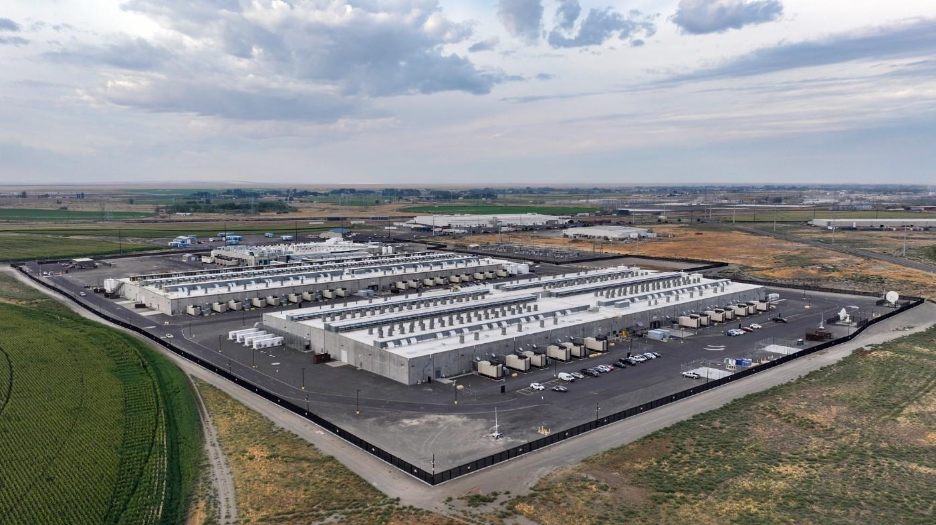
The estimation of the exact environmental costs produced as a biproduct of the growth of generative AI differs by the group reporting on these impacts. However, few to no credible sources argue that the environmental impact of generative AI is not significant. These negative impacts are primarily a biproduct of cooling data centers: “A data center is a temperature-controlled building that houses computing infrastructure, such as servers, data storage drives, and network equipment… While data centers have been around since the 1940s… the rise of generative AI has dramatically increased the pace of data center construction.” The environmental impacts associated with the maintenance of an ever-growing network of data centers includes both the energy (often produced through processes that emit GHGs into the atmosphere) and water needed to cool and run them. These environmental consequences call on us to question whether we should use AI tools in our work (work that aims to help curb climate change) and how we can do so responsibly.
To use AI, or not to use AI…
Among the EP Carbon team, we have referred to AI as an “intern.” In this role, AI is not taking the place of a college student or recent graduate though. In place of using AI, our analysts and other staff members would simply have to perform the tasks we occasionally assign to AI (general document and literature review, internal document drafting) without the assistance of platforms like Gemini or Copilot. Still, change is rapid and constant. The day may come when AI no longer hallucinates and no longer makes mistakes. For the time being, the limited use we give AI at EP Carbon and time savings passed on to clients may not be justified when weighed against the effort needed to check AI outputs, the risk of missing AI-produced errors, and the environmental consequences associated with operating data centers.

Matt Ruggirello, Senior Carbon Analyst
Matt is a Carbon Analyst at EP Carbon, contributing to AFOLU carbon project development with expertise in land cover analyses and the collection and modeling of forest inventory data. He previously worked as a Graduate Researcher at the Austral Center for Scientific Research in southern Argentina, quantifying tree regeneration and refining restoration strategies in degraded Patagonian forests. Matt holds a master’s degree in forestry from Northern Arizona University (U.S.A) and is nearing completion of a PhD in forestry and agronomy from La Universidad Nacional de la Plata (Argentina). He is the lead author of several peer-reviewed articles published in high-impact ecological journals. Matt also has several years of field experience as a Forester in the western United States. As a Forester for the Bureau of Indian Affairs, he assisted with forest inventories and sustainable harvest planning. He has experience in ecological restoration from his role with the Washington State Department of Fish and Wildlife and spent time over the course of a decade helping to design and implement eco-tourism and agroforestry projects in the Ecuadorian Amazon.