How Carbon Yards Works: Engineering the Conditions That Prevent Wood Decay
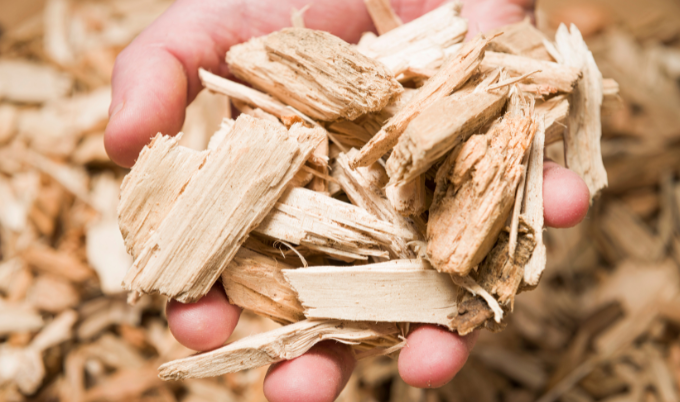
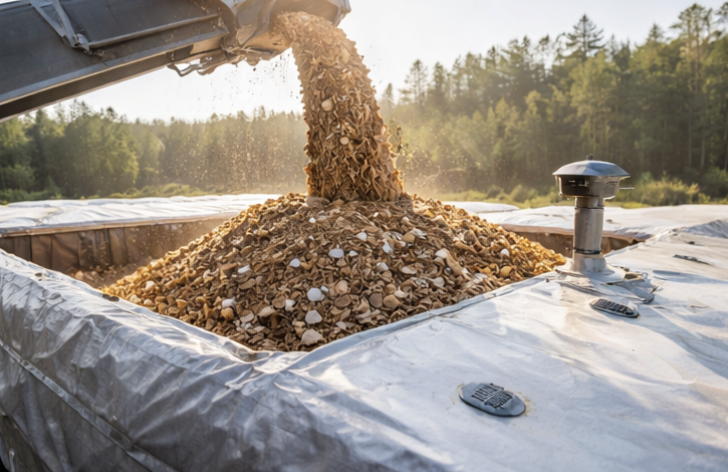
Carbon Yards combines proven preservation principles with engineered storage to create a warm, saline, low-oxygen environment that dramatically slows woody biomass decay.
Carbon Yards reduces carbon removal costs by building facilities close to abundant woody biomass, cutting transportation and logistics expenses. Broad feedstock tolerance further lowers costs by allowing facilities to use inexpensive, low-grade wood.
Carbon Yards is tackling one of the biggest barriers to scaling engineered carbon removal: cost. By permanently storing low-value woody biomass in engineered, continuously monitored aboveground chambers, Carbon Yards can deliver durable, high-integrity carbon removal at $45 to $85 per tonne, a fraction of the cost of many engineered CDR pathways. The result is a scalable removal solution that can help buyers lower the cost of their CDR portfolios without compromising on durability, monitoring, or verification.
Carbon Yards HCO2 Mississippi has successfully completed the Puro.earth Preliminary Assessment process and has been granted Future Facility status on the Puro.earth Supplier Listing. This milestone validates the project’s strong technical foundation, including its additionality, monitoring framework, permanence strategy, and environmental safeguards. By converting low-value forest residues into durable carbon removal while supporting sustainable forest management and rural communities, Carbon Yards offers a scalable, high-integrity approach to terrestrial biomass storage. Learn more about the project, the assessment outcome, and the next steps toward full facility certification.
Early-stage ARR projects often struggle to secure financing not because they lack potential, but because they lack the documentation and credibility funders need. Discover how Drawn Carbon helps projects become investment-ready faster.
As ARR projects grow, operational complexity often becomes a greater constraint than land or financing. Learn why operational infrastructure is essential for scaling successfully and how Drawn Carbon helps organizations build projects designed to scale.
Most carbon projects encounter validation challenges not because of poor documentation, but because critical design decisions are postponed until Project Description drafting is already underway. Drawn Carbon helps developers align project design with methodology requirements from day one, avoiding costly rework, reducing validation risk, and ensuring key decisions are made while the project is still flexible enough to change.
Carbon Yards goes beyond carbon storage by restoring the economic foundation of sustainable forest management. By creating a market for low-value biomass, it enables healthier forests, reduces wildfire risk, supports biodiversity, and drives economic growth across rural communities.
Nature-based solutions have long been limited by structural complexity and high barriers to entry. Platforms like Drawn Carbon are helping reshape participation, making it easier to scale high-integrity climate projects and unlock critical investment.
As scrutiny of carbon markets increases, credibility and accessibility must go hand in hand.
Our latest blog looks at how EP Carbon and Drawn Carbon are working to streamline project development, strengthen oversight, and expand access to high-quality nature-based climate projects.
A more transparent, scalable model for climate finance is possible — and already taking shape.
Carbon Yards offers a scalable approach to carbon dioxide removal using sustainably sourced forest biomass. By prioritizing permanence, additionality, and continuous monitoring, the system delivers trusted, long-term carbon storage at scale.
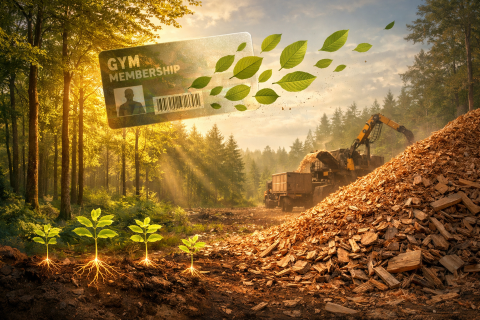
What if carbon credits worked like a New Year’s gym membership that actually changes habits? Carbon Yards creates new forest growth through sustainable management—not carbon accounting tricks.
Artificial intelligence is increasingly shaping nature-based carbon projects, from satellite data processing to real-time forest monitoring. While AI can improve efficiency and support project integrity, human expertise remains essential to ensure accuracy, accountability, and responsible use
Carbon Yards implements the framework from The Reconstruction of Carbon Outcomes by separating carbon generation from carbon preservation into two distinct, complementary functions. Carbon is generated through additional sequestration in regenerating forests supported by sustainable harvesting, while permanence is delivered through engineered storage systems that securely retain biomass and establish clear, undisputed carbon rights. This architecture produces carbon outcomes that are more durable, auditable, and aligned with emerging expectations for high-quality biomass carbon removal.
The Reconstruction of Carbon Outcomes introduces a new framework for addressing the buyers’ paradox in the voluntary carbon market—the persistent trade-off between affordable credits and credible climate impact. The paper explains how this paradox emerges from a structural flaw: the expectation that a single project must both create new climate benefit (additionality) and preserve it for the long term (permanence). By separating these two functions into independent generative and preservative activities, the framework enables lower costs, stronger durability, clearer accountability, and scalable integrity. This new architecture shows how carbon outcomes can be designed for both credibility and affordability, unlocking more efficient carbon markets and more durable climate impact.
Across the U.S. Southeast, the sharp decline in pulpwood demand has left millions of forested acres overcrowded and stressed, driving rising wildfire risk, declining forest health, and economic hardship for rural communities. EP Carbon introduces a new engineered carbon removal model that restores forest health, strengthens rural economies, and delivers durable, high-integrity carbon storage: Carbon Yards. Carbon Yards provides a permanent and transparent end-use pathway for low-value biomass that currently has no market, preventing decomposition or burning while enabling the forest restoration treatments that landowners can no longer afford. By creating a durable and additional carbon removal solution, Carbon Yards revives the economic foundation for sustainable forest management, unlocks natural regeneration, reduces fire risk, and supports rural livelihoods. Carbon Yards represents a paradigm shift in how nature-based carbon removal can be delivered at scale, creating transparent, measurable, and long-lived carbon outcomes that buyers can confidently support. See what EP Carbon is doing to help rebuild forest health and deliver long-lived climate impact!
As the world surpasses 1.5°C of warming, high-integrity carbon markets have never been more essential. Learn how carbon credits work, the difference between compliance and voluntary markets, and why investing in reductions and removals is critical to global climate goals.
The Integrity Council’s approval of Verra’s VM0047 methodology represents a major step forward for high-quality nature-based carbon projects. At EP Carbon, we’re encouraged by how VM0047 enhances transparency and scientific rigor through the use of dynamic performance benchmarks—leveraging remote sensing data to create more accurate and adaptive baselines for reforestation and revegetation. The upcoming version 1.1 expands opportunities for projects on degraded forest land and integrates with wetland restoration methodologies, improving both credibility and impact. These advancements align with EP Carbon’s commitment to developing robust, high-integrity carbon projects that deliver lasting climate benefits.
Innovative tools are boosting confidence in carbon markets. Better data and lower costs means a greater variety of projects may consequently gain access to carbon markets.
As the trajectory of reductions credit plateaus, removals are taking the spotlight. With 15+ years of experience, EP Carbon ensures projects meet the highest standards for climate impact while guiding developers through Verra’s VM0047 to build trusted, impactful climate projects.
Read on as we address the co-benefits offered by the implementation of Nature-Based offsets, with particular emphasis on their importance for forests. The question we want to analyze is: what implications do Nature-Based offsets have for forests or natural ecosystems beyond their global climate contribution?
EP Carbon values the hard work each member of our team provides. Read along to meet some of our staff and their contributions to the 2024 year!
EP Carbon provides technical services and support to projects at every stage of the development cycle in order to unlock opportunities and open the doors to long-term, durable solutions for communities and climate benefits. For years, we have been advocates of integrity in the carbon market, as our project portfolio clearly emphasizes.
A major challenge exists that there is no single, universally accepted standard for assessing carbon credit quality. This makes it difficult for buyers to compare projects and ensure they’re paying a fair price for the environmental benefits that credits represent. At EP Carbon we pride ourselves on the quality and transparency we bring to our projects.
Indigenous communities are not only stakeholders and participants, but indispensable leaders. This blog explores the need for Indigenous Peoples’ inclusion in carbon project design and development and highlights their supremely important role in contributing to climate change mitigation.
At EP Carbon, we start from a fundamental principle: no project, however beneficial it may seem, should proceed without the fully informed consent of the local authorities and communities. Read below to see the importance and how we follow through on that promise.
Discover how balancing both conservation and restoration projects is crucial for sustainable carbon projects.
Theory of Change in a project’s design phase is crucial for delivering long-term climate, community, and biodiversity impacts. Read more to learn how EP Carbon’s experience designing and bringing successful projects to the voluntary market allow for us to leverage TOC.
Discover how using advanced remote sensing technologies are enhancing project quality in forest carbon initiatives.
Discover how Verra’s programmatic shifts are enhancing project quality in forest carbon initiatives. Learn about new methodologies, baseline reforms, and strategic partnerships aimed at boosting transparency and credibility in the voluntary carbon market.
Learn how “Activity Data” is used in VM0048 to define baseline emissions and improve the quality of REDD projects through consistent…
Discover how EP Carbon utilizes Afforestation, Reforestation, and Revegetation (ARR) projects to restore degraded landscapes worldwide, ensuring quality, permanence, and scalable carbon removals.
Discover how EP Carbon stands out in the carbon market by delivering high-quality, transparent, and community-focused carbon projects. Learn about their commitment to sustainability, addressing market critiques, and setting industry standards for excellence.